Real readers. Real progress. Unparalleled results.
-
Early Elementary
-
Late Elementary
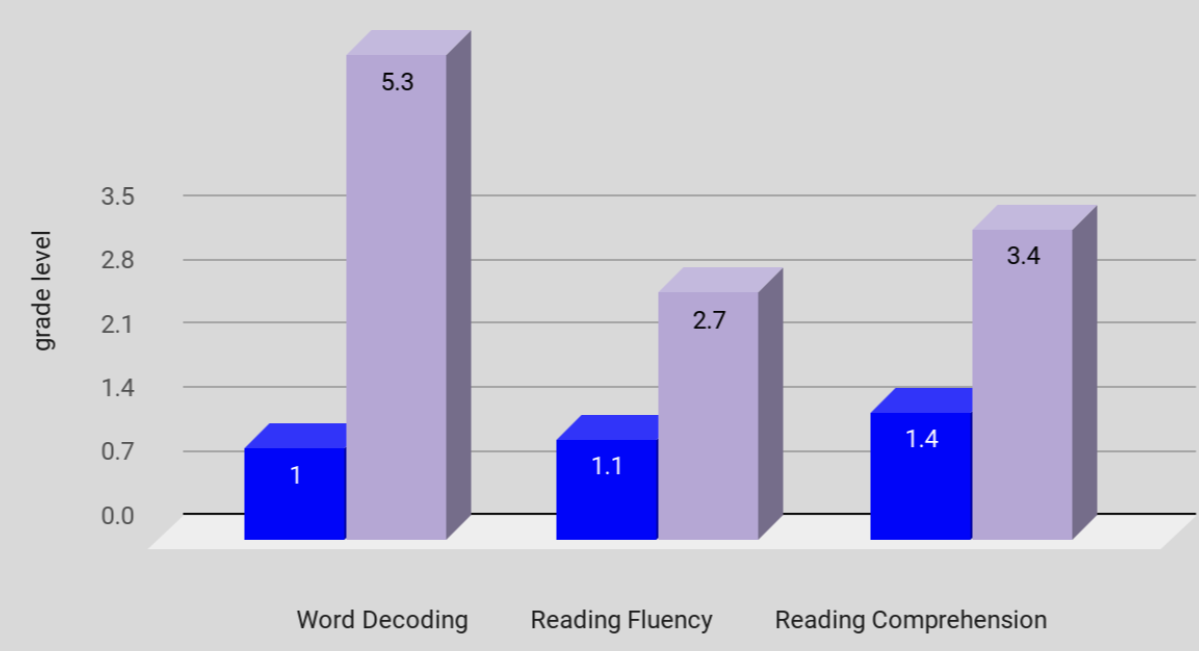
We compared Grade 2 students' standardized test scores before and after instruction in three areas: unfamiliar word reading, text reading, and reading comprehension. Dark blue bars represent pretest scores; light purple bars represent post-test scores.
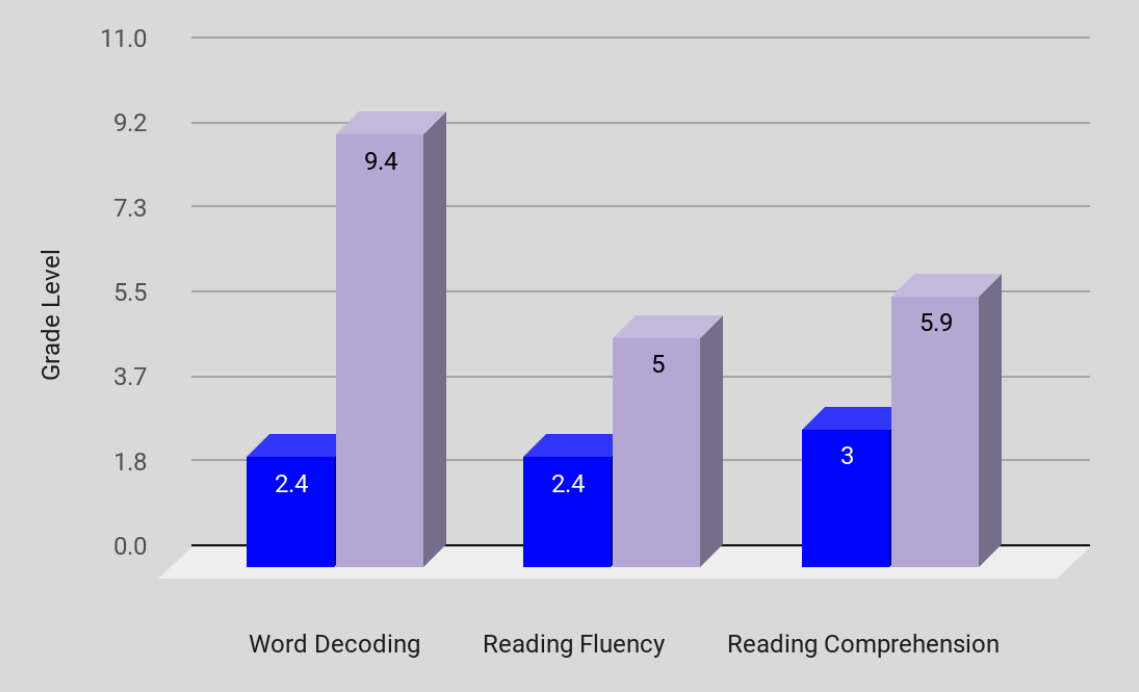
We compared Grade 5 students' standardized test scores before and after instruction in three areas: unfamiliar word reading, text reading, and reading comprehension. Dark blue bars represent pretest scores; light purple bars represent post-test scores.
Research & Innovation
SPARK Screener Validation Study
Partner: Dr. Nicole Conrad, Saint Mary's University
We're conducting a formal validation study of SPARK, our phonological awareness screener. The research is designed to establish the screener's reliability and validity as a tool for early identification of students who may need structured literacy support.
Game Development
Partner: Dr. Pawan Lingras, Saint Mary's University
We wanted to give students a fun, extra way to practice their skills outside of classes Working with Pawan and his team, we're developing a game that lets students reinforce what they're learning in a low-pressure way, making practice something they want to come back to rather than something they have to be told to do.
SPARK Screener Development
Partner: Dr. Pawan Lingras, Saint Mary's University
SPARK was built to solve a specific problem: most phonological awareness screeners depend on a trained teacher to administer them, which limits how quickly and consistently they can be used. Working with Pawan Lingras and his team, we developed a software-based screener that removes that dependency, making early identification more accessible and consistent across settings.
Independent Research
Improving English reading fluency and comprehension for children with reading fluency disabilities
Metsala, J. L., & David, M. D. (2022)
This study explored the effects of speeded word reading on two groups of students. Reading comprehension scores moved to the average range for both groups of students.
The Effects of a Computer-based Early Reading Program on the Literacy Skills of Kindergarten Students
Metsala, J. L., & Kalindi, S.C. (2022)
Our program's creator developed a computer game called Ooka Island, based on similar principles. Reading skills scores were boosted for kindergarten students who played Ooka Island in addition to their usual class instruction.
The Effects of Age and Sublexical Automaticity on Reading Outcomes for Students with Reading Disabilities
Metsala, J. L., & David, M. D. (2017)
For students with reading disabilities, becoming automatic with sublexical patterns contributed to better reading fluency. Students in all age groups made meaningful gains in reading fluency.
An Examination of Reading Skills and Reading Outcomes for Youth Involved in Crime Prevention Program
Metsala, J. L., David, M. D., & Brown, S. (2017)
This study explored the effects of a reading intervention for youth in a crime prevention program. Word reading and reading fluency scores improved for this cohort of students. Reading comprehension skills made gains for this group of students.

Closing the Reading Gap

The Effectiveness of a Group Reading Instruction Program with Poor Readers in Multiple Grades
Identifying Phonological Awareness Deficits with Event-Related Brain Potentials
Newman, R. L., Connolly, J. F., McIvor, K., MacDonald, W., & Arnold, S. (2001)
By examining the neural responses associated with phonological processing tasks, we aim to shed light on how ERPs can serve as valuable tools in identifying and addressing phonological awareness challenges.

Expert Reviews
Pedagogy Non Grata
Education researchers use effect sizes to capture the overall effectiveness of educational programs. Using this type of analysis, our program received a qualitative grade of 9/10.
What Works Clearinghouse
What Works Clearinghouse reviews high-quality research to recommend educational programs that truly work. In reviewing the research, WWC found that our program has positive effects on alphabetics, reading fluency, and comprehension.
Evaluation by Florida Center for Reading Research
The FCRR identified our program as a scientifically based reading intervention program, identifying the following strengths:
- Multiple and varied phonemic awareness and phonics activities
- Explicit, highly structured, step-by-step format
- Intense focus on reading fluency
- Built-in review to ensure a firm foundation
- Clear and easy-to-follow manual
- Studies demonstrate substantial gains across grade levels and among students with differing ability levels